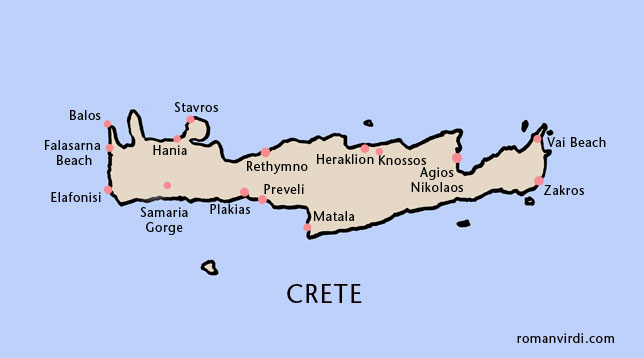
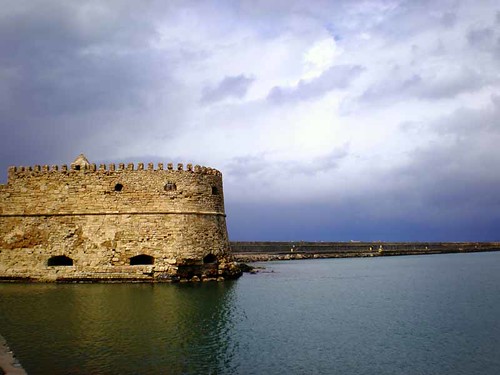
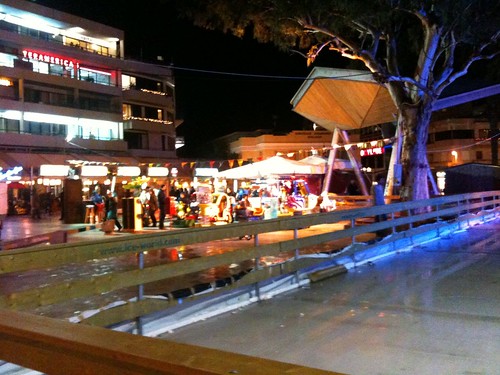
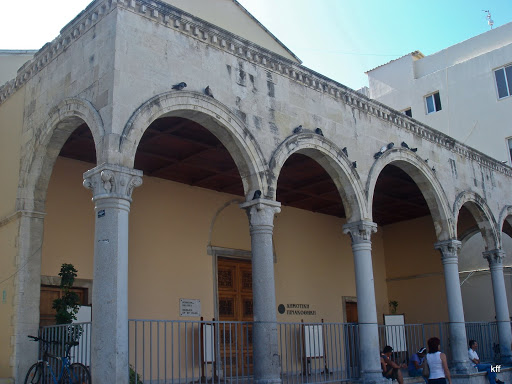
One of the optional cruise excursions on Crete is a visit to the Palace of Knossos about 30 minutes from the city of Heraklion and lasts about 3 hours. We will be docked in Crete on Thursday from 7 a.m. until 11:30 a.m. The excursion costs around 56 Euros (subject to change).
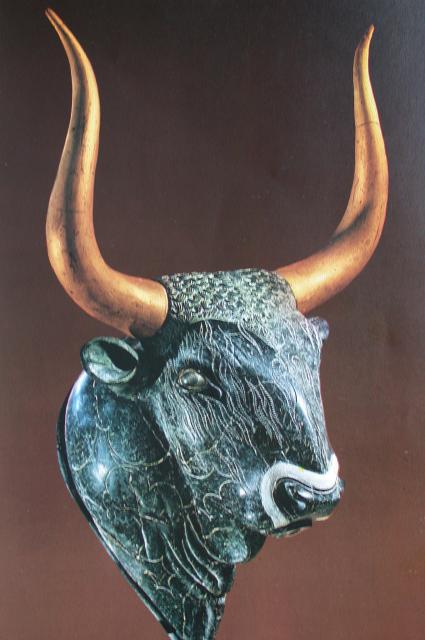
Knossos was once the capital city of the prehistoric Minoan civilization and thought to be the basis for the original underground labyrinth housing the mythological Minotaur. This half-man, half-bull was born of King Minos’s wife, Pasiphae, and slain by Theseus. We will be able to visit a portion of the excavated and partially reconstructed Palace of King Minos and the surrounding area.
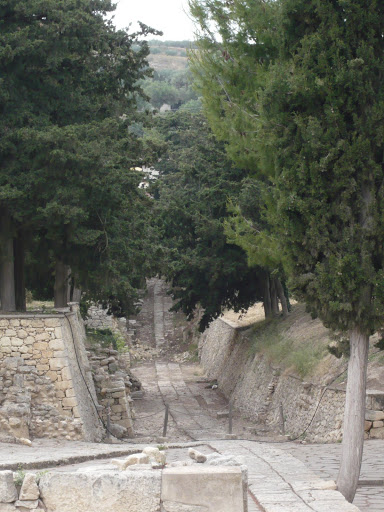
There are many palaces on the island of Crete, but Knossos is the largest and most sophisticated with over 1,000 rooms and an elaborate drainage system, flushing toilets, and paved roads. All the more amazing because this palace dates to around 1700 BC! The first palace, built around 1900 BC, was destroyed by an earthquake and these ruins date almost entirely from the rebuilding.
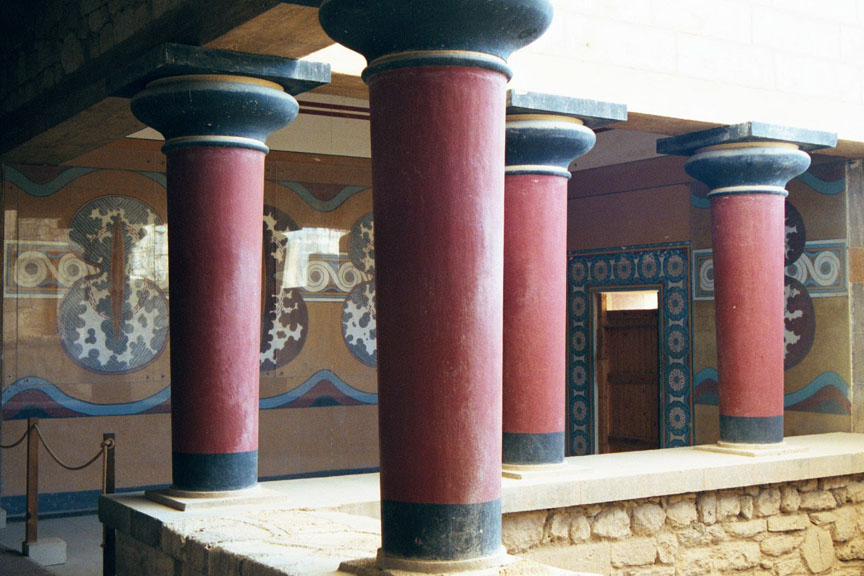
Unlike other Minoan sites, the Palace of Knossos was restored by Sir Arthur Evans between 1900 and 1929. Although his version of the reconstruction is controversial at best, it does give us an idea of life in the Minoan civilization.
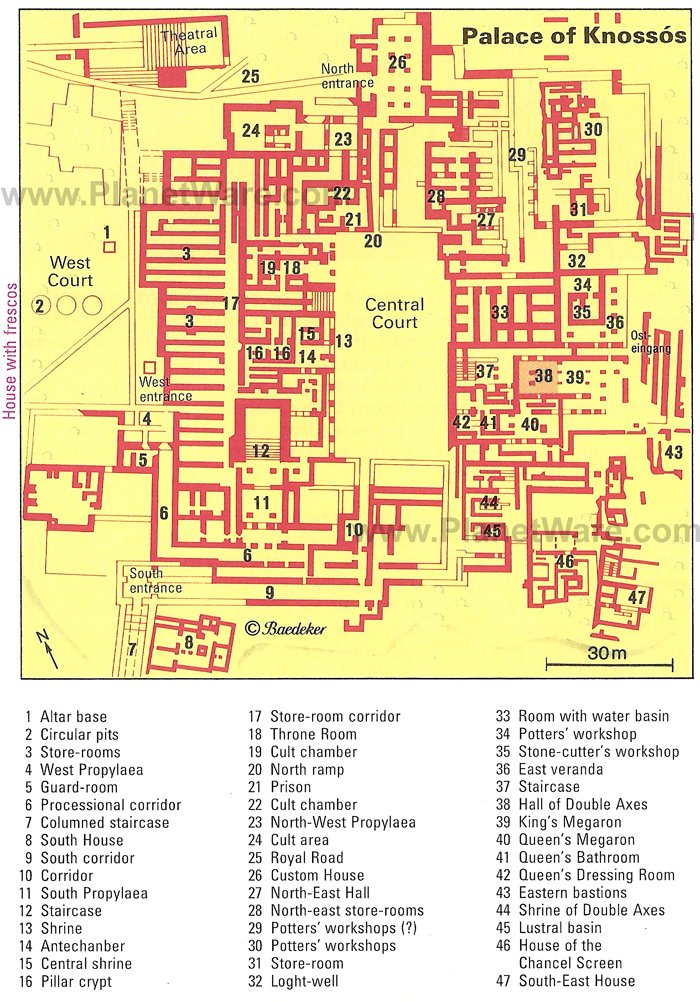
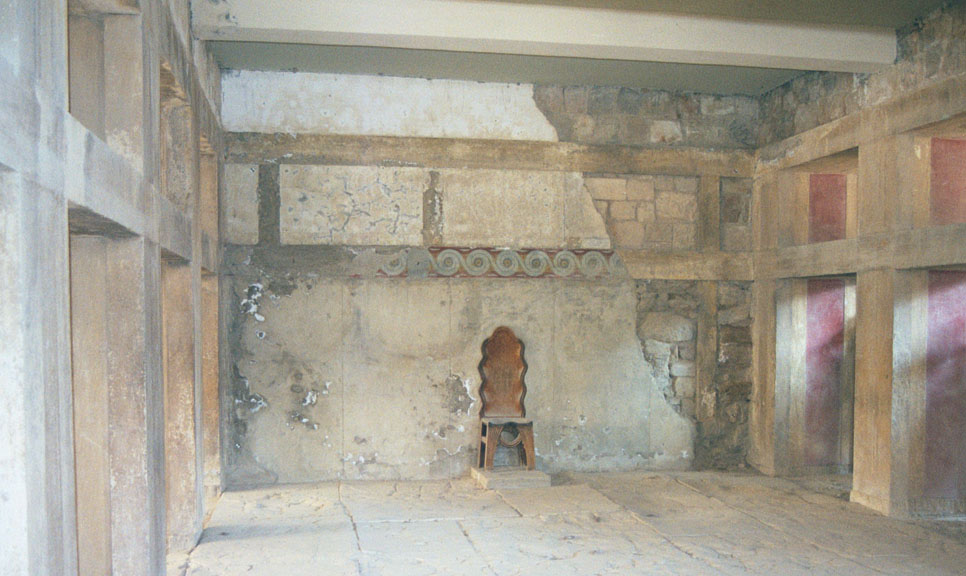
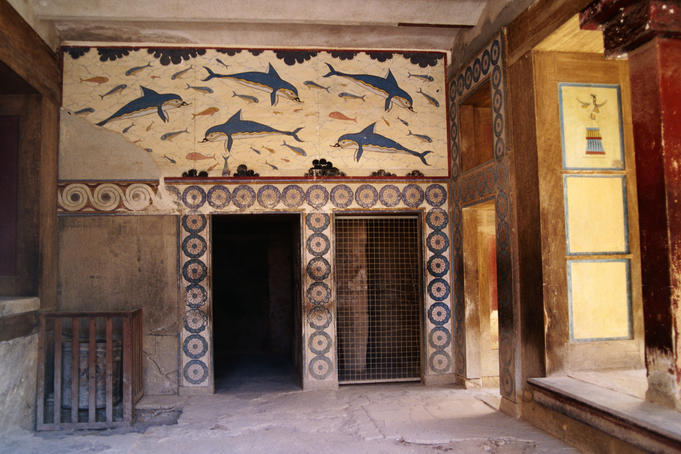
The Palace houses the Hall of the Royal Guard decorated with frescoes and shields, the Hall of the Double Axes, the King’s Chamber housing the alabaster throne amid paintings of griffins and lilies, and the Queen’s Apartment adorned with murals of dolphins and spirals reminding us of the legend of the labyrinth. The original frescoes are in the Archaeological Museum in Heraklion.
The King’s Chamber and the Queen’s Apartment may be closed due to temporary restoration but can be viewed from above. Go here for a 3D virtual reality tour. Be sure to click inside each photo to scroll around for a 360-degree view.
This is an excellent introduction video to Knossos and the part Sir Arthur Evans played in its excavation and reconstruction.
The remaining time will be spent browsing in Heraklion. Since the museum is closed for restoration until 2012, a special exhibit of its most famous holdings is available, but the entrance fee is not included in the excursion price.
If you are game to try and visit Knossos on your own, here is a site that will give you some tips.