Wednesday, August 18, 2010

New Acropolis Museum in Athens

The new Acropolis Museum might be your choice for your free time in Athens. Located at the base of the Acropolis the new archeological museum opened 21 June 2009 to replace a smaller version.

Over 4,000 artifacts discovered in and around the Acropolis are housed in the museum, except for the Elgin Marbles from the Parthenon which are still contained in the British Museum… and a source of contention as Greece has repeatedly requested their return and designed this larger museum to house them.

The museum is located on the southeastern slope of the Acropolis in the historical area of Makriyianni on the road that originally led up to the sacred site. Excavations during construction revealed earlier Byzantine ruins that now lie beneath the museum which can be seen in many places through transparent floors.

Exhibits are on three levels while a fourth middle level houses shops, cafes, and offices. On the first level of the museum there are the findings of the slopes of the Acropolis. The long and rectangular hall whose floor is sloping, resembles the ascension to the rock. Then, the visitor is found at the large trapezoidal hall which accommodates the archaic findings. The original Caryatids from the Erechthion are housed here also.

Be sure to click on the Photos link at the bottom of the web site Organization for the Construction of the New Acropolis Museum and look at each set of photos by clicking “Start Slideshow” at the bottom of each page. In particular, you will want to watch the videos from the link at the bottom of the site. The one on the virtual tour is not high quality, but the others on the construction, moving the exhibits, and the archeological findings beneath the museum are interesting.

Now take a look at the official Acropolis Museum web site and be sure to open each of the galleries to see what the exhibitions look like with the museum now open to the public.

Wednesday, August 4, 2010

Quick Tips 1

Occasionally I am going to post assorted quick tips for travelers. There will be no particular theme…just random things I’ve heard that work or great ideas I see in magazines or on TV. If you have an idea that you’d like to share with the rest of the group, just send it via email and I’ll include it in the next Quick Tips posting.
--Sometimes a cramped cruise ship bathroom doesn’t offer a lot of space for towels or other toiletries. Try packing a quick-release suction cup with a hook to hang your toiletry bag from.
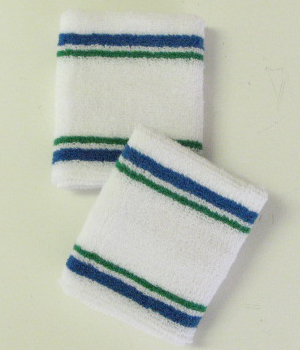
--To protect the lens of a bulky camera without keeping it in a case, try slipping an extra-wide tennis wristband over the camera lens and viewing screen. That way you can avoid scratches while putting your camera in a purse or backpack.
--Flat irons aren’t just for hair. Put it on a low setting and touch up the seams of shirt sleeves or cuffs of shorts or pants. And try using your blow dryer to take the wrinkles out of clothes. Hold it a few inches from the garment and move slightly back and forth.
--Want to know what it’s really like where we are going? Then check youtube.com. Lots of people post their vacation videos online. You’ll get a feel of what it will be like from a real person’s point of view rather than just a guidebook description. Here is an example of the Greek island of Rhodes.
--Bumpy airplane rides? I hope not, but try strong peppermints. Peppermint oil found in strong mints like Altoids is one antidote for an upset stomach.
--Another way to look at our trip. Download Google Earth, a free app for your PC or iPhone. Search for any of our destinations and get a satellite view that you can zoom in to. Some places show up fairly clear in this aerial view. Here is another example of Rhodes. Warning: Playing with Google Earth is addictive!!
--And I know this one is going to sound outrageous and I don’t know that I would do it because I would feel so conspicuous on the plane, but after spending 12 hours on the flight to and from China I know it would have worked. I read where someone took an inflatable beach ball on flight. After blowing it up, they used it to lean over and sleep on! All I could think of on that long flight was how much my back would appreciate that beach ball! There's also an inflatable neck pillow that takes up little space in baggage. I like the cushioned neck pillow. Even though it is bulkier, it is more comfortable for me. I don't pack it...I just slip it through the handles of my carryon bag.
Send me your tips!

Wednesday, July 28, 2010

Greek Gods and Goddesses

One cannot truly understand Ancient Greece culture without having a basic understanding of the religion and beliefs of the people of the period. So here is a brief background of the primary Greek gods and goddesses associated with many of the sites we will visit. The Romans, who came later, adopted many of the Greek deities, but changed the names. The only name they did not change was Apollo.

In Greek mythology, twelve gods and goddesses ruled the universe from atop Greece's Mount Olympus. These Olympians had come to power after their leader, Zeus, overthrew his father, Kronos, leader of the Titans. All the Olympians are related to one another.

The following well done videos give a good explanation of gods and goddesses. You can also access the Greek Gods video at this link and the Greek Goddesses video at this link. Once you've seen the videos and read the family tree below, then test your knowledge with the ThinkQuest interactive test at the bottom of this post.

The Ancient Greek Gods


Rod Stewart MySpace Video


The Ancient Greek Goddesses


Rod Stewart MySpace Video


Zeus (Roman name: Jupiter)

The most powerful of all, Zeus was god of the sky and the king of Olympus. His temper affected the weather, and he threw thunderbolts when he was unhappy. He was married to Hera but had many other lovers. His symbols include the oak and the thunderbolt.

Hera (Roman name: Juno)

Hera was goddess of marriage and the queen of Olympus. She was Zeus's wife and sister; many myths tell of how she sought revenge when Zeus betrayed her with his lovers. Her symbols include the peacock and the cow.

Poseidon (Roman name: Neptune)

Poseidon was god of the sea. He was the most powerful god except for his brother, Zeus. He lived in a beautiful palace under the sea and caused earthquakes when he was in a temper. His symbols include the horse and the trident (a three-pronged pitchfork).

Hades (Roman name: Pluto)

Hades was king of the dead. He lived in the underworld, the heavily guarded land where he ruled over the dead. He was the brother of Zeus and the husband of Persephone, Demeter's daughter, whom he kidnapped.

Aphrodite (Roman name: Venus)

Aphrodite was the goddess of love and beauty, and the protector of sailors. She may have been the daughter of Zeus and the Titan Dione, or she may have risen from the sea on a shell. Her symbols include the myrtle tree and the dove.

Apollo

Apollo was the god of music and healing. He was also an archer, and hunted with a silver bow. Apollo was the son of Zeus and the Titan Leto, and the twin of Artemis. His symbols include the laurel tree, the crow, and the dolphin.

Ares (Roman name: Mars)

Ares was the god of war. He was both cruel and a coward. Ares was the son of Zeus and Hera, but neither of his parents liked him. His symbols include the vulture and the dog, and he often carried a bloody spear.

Artemis (Roman name: Diana)

Artemis was the goddess of the hunt and the protector of women in childbirth. She hunted with silver arrows and loved all wild animals. Artemis was the daughter of Zeus and Leto, and the twin of Apollo. Her symbols include the cypress tree and the deer.

Athena (Roman name: Minerva)

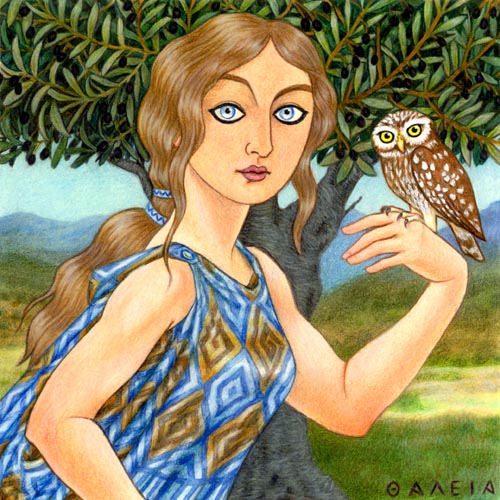
Athena was the goddess of wisdom. She was also skilled in the art of war, and helped heroes such as Odysseus and Hercules. Athena sprang full-grown from the forehead of Zeus, and became his favorite child. Her symbols include the owl and the olive tree.

Hephaestus (Roman name: Vulcan)

Hephaestus was the god of fire and the forge (a furnace in which metal is heated). Although he made armor and weapons for the gods, he loved peace. He was the son of Zeus and Hera and married Aphrodite. His symbols include the anvil and the forge.

Hestia (Roman name: Vesta)

Hestia was the goddess of the hearth (a fireplace at the center of the home). She was the most gentle of the gods, and does not play a role in many myths. Hestia was the sister of Zeus and the oldest of the Olympians. Fire is among her symbols.


Hermes (Roman name: Mercury)


Hermes was the messenger god, a trickster, and a friend to thieves. He was said to have invented boxing and gymnastics. He was the son of Zeus and the constellation Maia. The speediest of all, he wore winged sandals and a winged hat and carried a magic wand.

…also sometimes included:
Demeter (Roman name: Ceres)

Demeter was the goddess of the harvest. The word “cereal” comes from her Roman name. She was the sister of Zeus. Her daughter, Persephone, was forced to live with Hades each winter; at this time Demeter let no crops grow. Her symbols include wheat.

Dionysus (Roman name: Bacchus)

Dionysus was the god of wine, which he invented. In ancient Greece Dionysus was honored with springtime festivals that centered on theater. Dionysus was the son of Zeus and Semele, a mortal. His symbols include ivy, the snake, and grapes.


(be patient as it may take a little while to load...but worth it!)
Requires Java

Tuesday, July 13, 2010

Ancient Agora of Athens

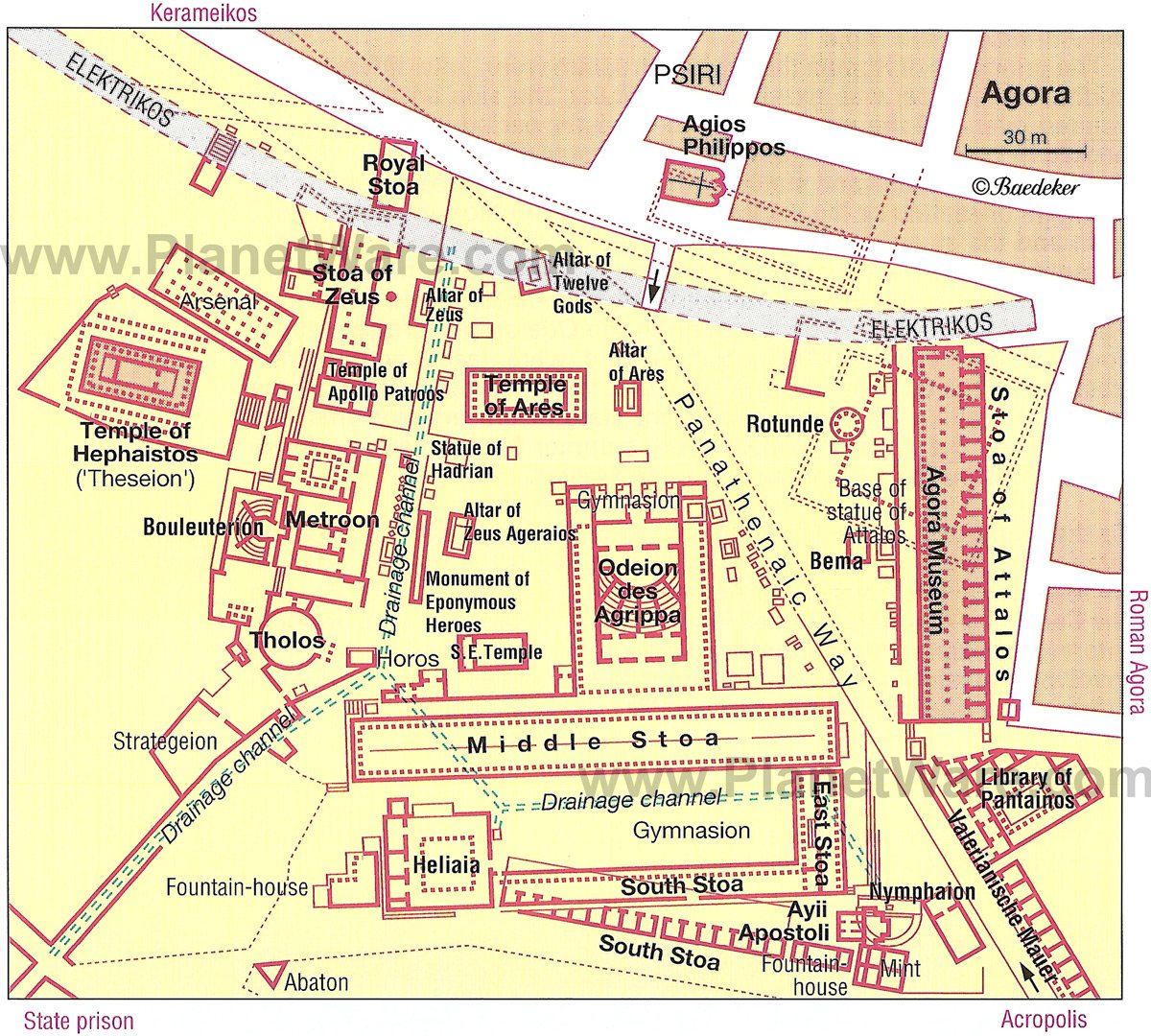
As mentioned previously the Tower of the Winds is actually located just between the Plaka District and the Ancient Agora of Athens (a site similar to the Roman Forum in Rome). The Agora is located just north of the Acropolis.

The democratically governed Agora was the political and religious heart of Athens as far back as the 6th century BC. It was also the center of daily and commercial life…similar to what town squares used to be in the United States.

It was here that law courts were located and anyone who happened to be in the Agora during a trial could witness these proceedings. It was however only adult male citizens appointed by lot who could serve as jurors.

The state prison was located here as well as the mint which produced the city’s coins inscribed with an owl, the symbol of Athena, goddess of wisdom and the patron goddess of Athens.

The American School of Archeology has been excavating the Agora since 1930 and the finds are exhibited in the two-story stoa of Attalos which now serves as a museum. This main building in the Agora was built by King Attalos of Pergamon (ruled 159-138 BC) but was destroyed in 267 AD.

It was rebuilt between 1953-56 on the original foundations using ancient building materials. A unique exhibit in the museum is a klepsydra, a water clock that was used for timing plaintiff’s speeches. Other items include bronze ballots and everyday items such as terracotta toys and leather sandals.

Also located in the Agora (and its best preserved ruins) are the Odeion of Agrippa, once a covered theatre, and the Hephaisteion, a temple to Hephaistos also known as the Theseion.

This 51-page full-color guide to the Agora prepared by excavator John McK. Camp II presents information about each building in the Agora complete with color photographs, maps, diagrams, and drawings. If you are planning to spend your free time exploring Athens (we have a day and a half!), then you might want to print this guide to use in your visit to the site.

You will enjoy this short YouTube video, Teacher Travels: Ancient Agora, which shows many of the fascinating relics discovered by the archealogists.

Wednesday, July 7, 2010

The Plaka District

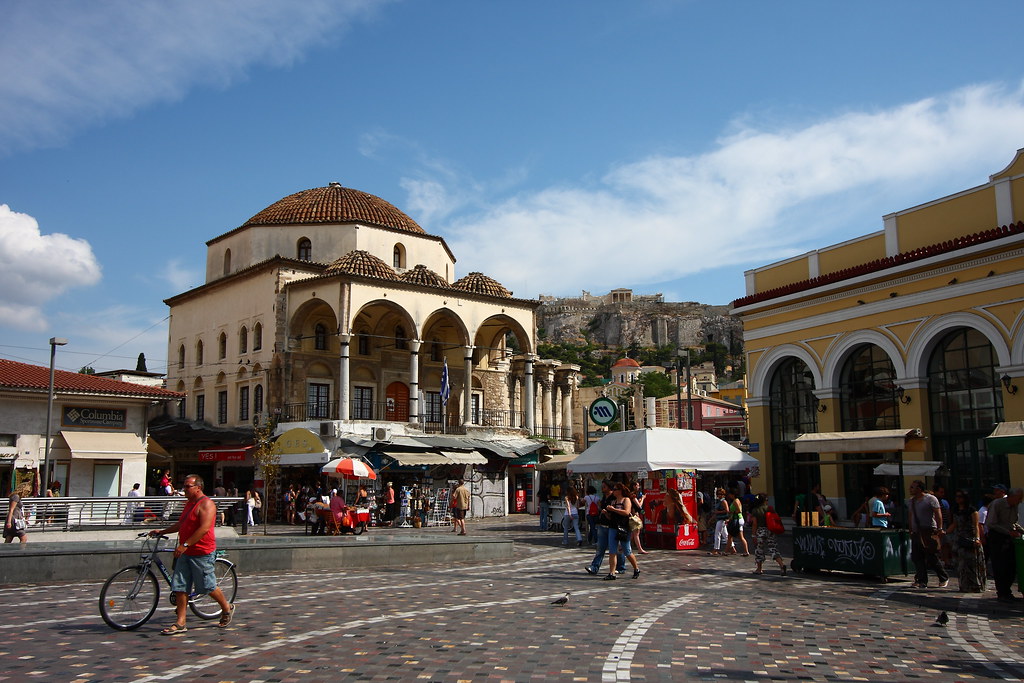
In the shadow of the Acropolis lies the neighborhood known as the Plaka District, one of our destinations on the walking tour the day we arrive in Athens. It is the historic heart of the city and the oldest continuously inhabited area in the city.

It lies just to the east and at the base of the Acropolis. Most streets have been closed to automobile traffic.
The name probably came from pliaka (meaning old) used by Albanian soldiers in the service of the Turks who settled here in the 16th century.

Here you will find old-fashioned tavernas where you can have a bite to eat or you can browse in the many antique and icon shops. There are also lots of souvenir and jewelry shops here too.

You will also find a few galleries and there are several museums in the Plaka. Of special note are the Children's Museum, the Music Museum, the Greek Folk Art Museum, and the Jewish Museum.

The Lysikrates Monument, built to commemorate the victors at the annual choral and dramatic festival, is located in the Plaka District. It is the only choregic monument still intact in Athens. Its name comes from choregos (or sponsor) of the winning team.

A notable church in the Plaka is the Agios Nikolaos Ragavas which has ancient columns built into the walls.

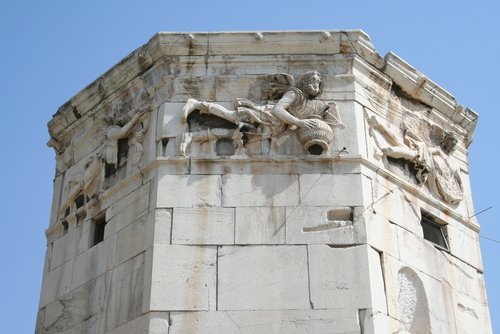
The most impressive building located here is the Tower of the Winds in the far west of Plaka and part of the ancient Roman Agora. Built by the Syrian astronomer Andronikos Kyrrestes around 100 BC, it has a weather vane and waterclock. On each of its marble sides one of the eight mythological winds is depicted.

Enjoy a tour of the Roman Agora, the Plaka District, and a few other Athens sites on this short YouTube video.

Wednesday, June 30, 2010

Greek Temple Architecture

Knowing a little about Greek temple architecture will help you identify buildings and ruins even without a guide. You will then be able to apply this information to other buildings regardless of the location.

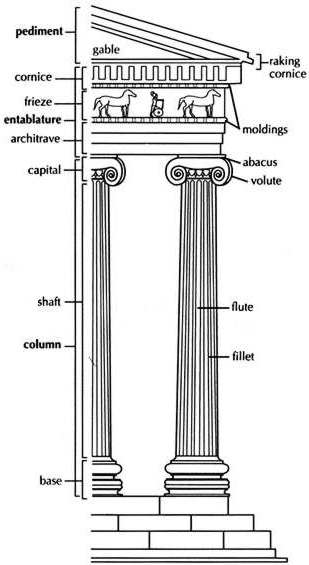
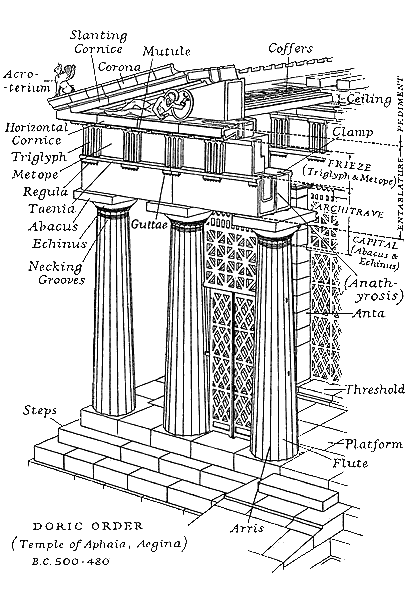
Greek temple architecture is divided into three styles which evolved chronologically and can readily be identified by the column capitals, or the decoration at the top of each column.

Doric temples, such as the Parthenon, were surrounded by sturdy capitals with plain capitals and no bases.

Ionic temples differed from Doric by having more columns and with a distinctive style capital called a volute. The volute looks like ram’s horns on the front and back of each column. (I think of the first two letters of Ionic--I for the tall column which looks like an I and O as the two volutes look like O’s at the top of the column).

Corinthian temples in Greece were built under the Romans and only in Athens, but you will see this column style on other buildings elsewhere. These columns are more slender and have very elaborate capitals decorated with acanthus leaves. (I think of Corinthian as a “fancy” word and the top of this column is “fancy!”)

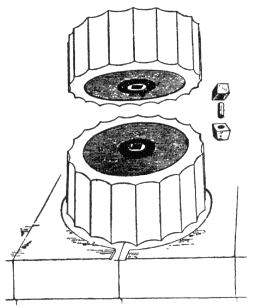
Columns were not one large piece of carved stone. They were constructed of round stone drums stacked on top of each other. Fluting on the columns was carved in situ, guided by that on the top and bottom drums.

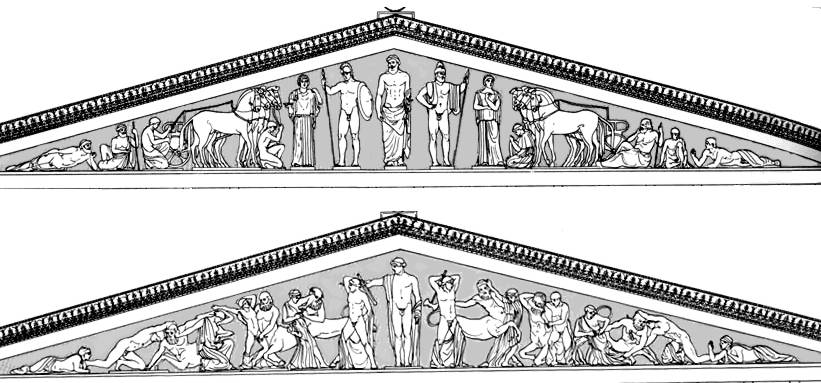
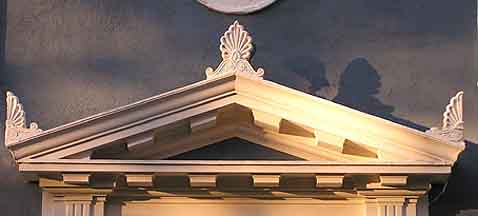
The pediment of a temple is the triangular gabled end of the building which sometimes has designs or sculptures according to the temple style. The frieze is the long slender band just below the pediment that extends all around the building and is usually decorated.

At the corners of temples and the peak of the pediment were akroteria, or statues, but almost no upper portions of Greek temples survive.

A ramp led up to the entrance, and the stepped platform was built on a stone foundation.

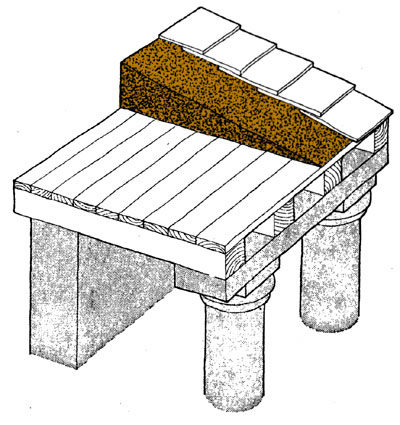
Inside a temple, the cella or naos, or inner sanctum, housed the cult statue of the god or goddess to whom the temple was dedicated. The cella opened to the east. The roof was usually supported by wooden beams with terracotta tiles, which would explain why many of the temples in ruins have no roofs as they decayed over time.

And did you know that Greek temples were originally painted in bright vibrant colors? The paint has simply worn off with time. Who knew!

Thursday, June 24, 2010

The Parthenon

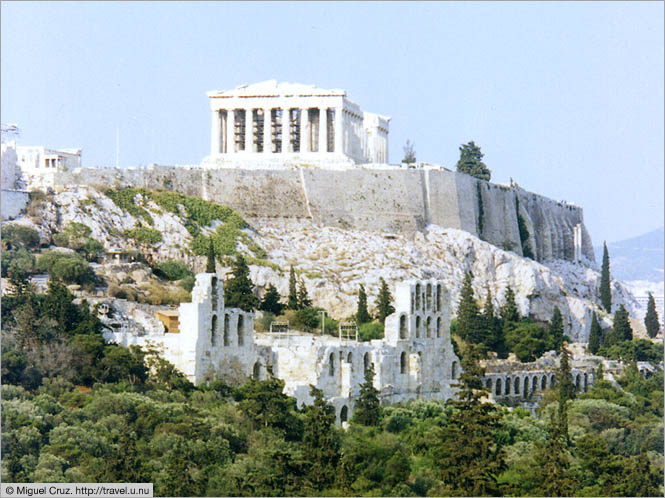
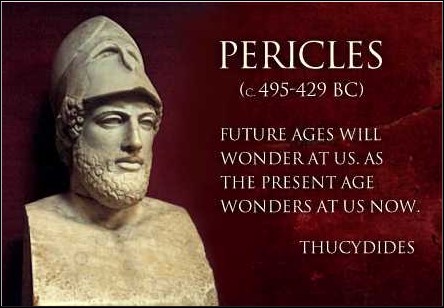
One of the most famous buildings in the world is the Parthenon, the crown jewel that tops the Acropolis in Athens, Greece. Pericles commissioned its construction as a grand rebuilding project in 447 BC.

The sculptor Pheidias was entrusted to supervise the construction of a magnificent new Doric temple to the goddess Athena, the patron goddess of the city. Built on the site of earlier Archaic temples, it was built primarily to house the Parthenos, Pheidias’s impressive 39-foot high cult statue of Athena covered in ivory and gold.

Taking nine years to complete, the temple was dedicated to the goddess during the Great Panathenaia festival of 438 BC. Constructed of Pentelic marble by the artchitects Kallikrates and Iktinos, the complex architecture of the Parthenon replaces straight lines with slight curves. All the columns swell in the middle, similar to a cigar shape, and all lean slightly inwards.

The reason for this is not quite clear. Some suggest it was done to prevent visual distortion, while others argue it was simply for aesthetic reasons. I have also heard that its design withstands earthquakes better, of which the surrounding area is susceptible.

The building remained a temple to Athena for over a thousand years until the Roman Empire came into power. It was then the statue was looted and destroyed. The Parthenon has also served as a Christian church, a mosque, and even a Turkish arsenal. Its present state of ruin owes to an ammunition explosion during a Venetian invasion in 1687.

The pediments, metopes, and friezes which run around the temple depict the people and horses in the Panathenaic procession, while other sculptures represent Greek mythology and Athenian historical events. During the explosion, many of the sculptures were blown off the building and scattered.

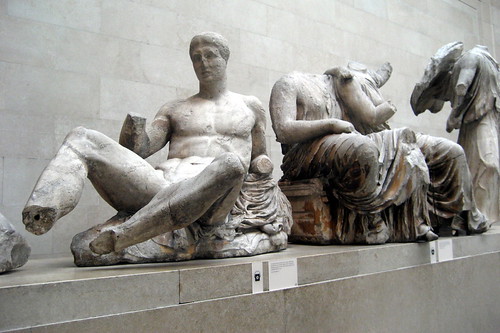
In 1806, Thomas Bruce, 7th earl of Elgin, removed many of the sculptures with the Turks permission and the "Elgin Marbles" are currently on display in the British Museum in London. At present, the Greeks are trying to get the sculptures returned to Athens, but with little luck. But there are two sides to every story...the British and the Greeks.

The Parthenon is currently in a state of restoration, but officials do not plan to return it to its pre-1687 state. An exact to scale replica of the Parthenon stands in Nashville, Tennessee. It was built in 1897 as part of the Tennessee Centennial.

Enjoy a 360-degree panorama view of multiple locations atop the Acropolis. Just click on any location and number at this site and move your cursor around. You're almost there!