Showing posts with label Krakow. Show all posts

Friday, June 7, 2013

What to Do on Our Free Afternoons

Szechenyi Thermal Pools
Our itinerary calls for free afternoons in all four major cities – Berlin, Prague, Krakow, and Budapest.  That means we need to do a little research prior to our tour to plan where we would like to go.  In case the full group optionals planned by our tour director do not make, I recommend small groups as you can cover more territory and save time – especially if you have a plan before we arrive.

We will not be doing the Potsdam optional excursion on the itinerary, so we do have a free afternoon in Berlin.  We have already paid for an afternoon excursion to the Wieliczka Salt Mine near Krakow, so that afternoon is not free.  So you will need to make some decisions for Berlin, Prague, and Budapest.  We do have a Danube River cruise in Budapest included in our tour (and not on the detailed itinerary), but I do not know if it is in the afternoon or evening.

One site to revisit for ideas is the original slide show I created when we first learned about our tour.  Also revisit the series of 37 Rick Steves videos on Central and Eastern Europe.

The following links might also give you some ideas:

BERLIN
Interactive Berlin Map (Hover over an attraction and it is located on the map.  Click on an attraction and go to more information.)

PRAGUE
Interactive Prague Map

BUDAPEST
Interactive Budapest Map

KRAKOW
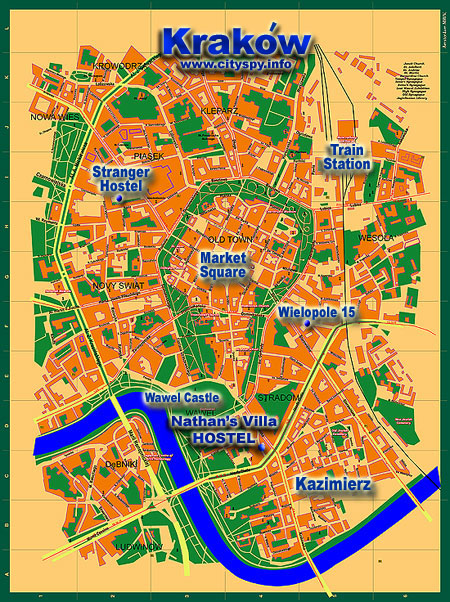
Interactive Krakow Map

DRESDEN
Interactive Dresden Map

Thursday, July 26, 2012

Krakow - Wawel Cathedral and Castle


In the 16th century, Poland was one of the few countries to resist change from the Reformation to become one of the most prominent countries in Europe in the early 17th century.  But less than 200 years later, Poland had ceased to exist swallowed up by Prussia, Russia, and the Austro-Hungarian Empire.

While soldiers lived in the royal palaces, the crown jewels were melted down.  From 1797 until the Warsaw Pact was dissolved in 1991, Poland celebrated only two decades of independence from 1921-1939.

Throughout its tumultuous history, only two entities served to stabilize and unite Krakow – the second oldest university in central Europe and Wawel Cathedral and Castle atop Wawel Hill (pronounced Vavel).  Both serve as iconic symbols of all that is Poland. 

Wawel Cathedral overlooks the River Vistula and is the burial place of 41 of the 45 Polish monarchs, and the cathedral is a shrine to Stanislaw, an early bishop of Krakow who was executed in 1079 for his part in a rebellion against King Boleslaw.  His silver coffin held up by four silver angels lies beneath a black marble canopy at the main altar

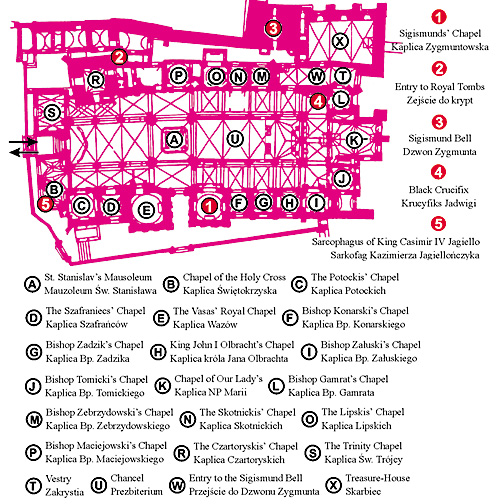
Most of the buildings in the complex date from the 14th century, although the 18 elaborate side chapels were added later and it is there where the majority of the memorials to the monarchs are located including those of the two responsible for the cathedral’s creation: Wladyslaw the Short and Kazimierz the Great (made of red marble.)

One of the most interesting stories is of the most magnificent chapel – the Zygmunt, or Sigismund, chapelKing Sigismund, designed the chapel as a mausoleum for his Jagiellon dynasty, which ruled Poland for over 200 years.  However, his wife poisoned the first two wives of their only son before they could produce an heir.  Even though their son, Sigismund Augustus II, remarried, he was so distraught that he never consummated the marriage.  King Sigismund’s daughter, Anna, became the last of the Jagiellon dynasty.

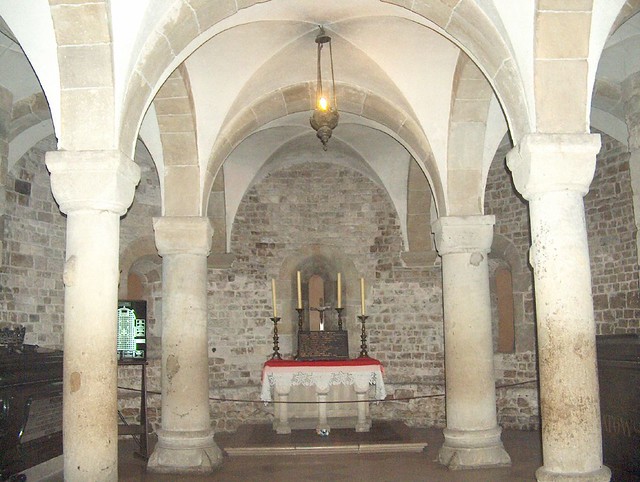
The underground Saint Leonard’s Crypt is a mausoleum for royals and national heroes.  This brief history of the Wavel Cathedral from the official web site is excellent and has great photos.

The cathedral roof boasts three towers, one containing the great Zygmunt Bell from 1520, still rung on special occasions.  This video “Krakow – Royal Sigismund Bell” (0:44) gives you a short tour in the bell tower.  For a wonderfully complete guide to print to use while touring Warwel Cathedral, go here as it describes each chapel in detail.

Father Karol Wojtyla, later to become Pope John Paul II, said his first Mass in the crypt of Wawel Cathedral on 3 November 1946.  Seventeen years later, he took over the cathedral as Archbishop of Krakow.  Fifteen years after that, he led the entire Roman Catholic world as Pope.

Also atop Wawel Hill is the gothic castle which is heavily influenced by Italian Renaissance style.  The three tiers of galleries enclose a courtyard where one can see the noted Hen’s Foot Tower and the Danish Tower.

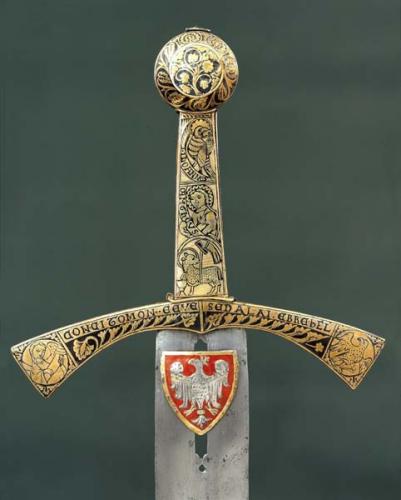
Very little is left of the crown jewels, but the most important is the sword of state, or Szczerbiec, used since the 13th century in coronation ceremonies in Wawel Cathedral.  This site will tell in detail the various rooms and exhibitions in the royal castle.  Click on each of the tabs for more information.  This might be a good guide to print to use on tour.   This site also has some very nice photos.

Legend says that a fierce dragon once lived in a lair at the foot of Wawel Hill and was slain by the hero Krak, the founder of Krakow

This video of “Wawel Castle in Krakow  - Crakow Life” (1:40) gives a brief overview of outside the castle and cathedral.

Wednesday, July 18, 2012

Krakow - Auschwitz and Birkenau


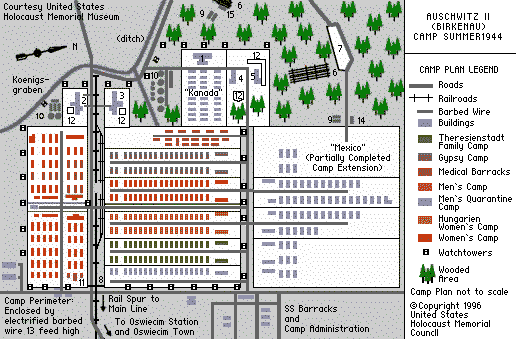
Located in Poland near the city of Krakow, these two Nazi concentration camps, also known as Auschwitz I and Auschwitz II, were the scene of one of Hitler’s worst crimes in World War II.  Here over one million men, women, and children lost their lives.

Auschwitz was actually a network of concentration camps consisting of Auschwitz I (the base camp), Auschwitz II or Birkenau (an extermination camp), Auschwitz III or Buna-Monowitz (a labor camp), and 45 satellite camps.

From early 1942 to late 1944, transport trains delivered Jews to Birkenau’s gas chambers from all over Nazi-occupied Europe.  Although Jews were not the only ones imprisoned here, around 90 percent of those who died were of Jewish descent.  On 27 January 1945, the Soviets liberated the Auschwitz camps.

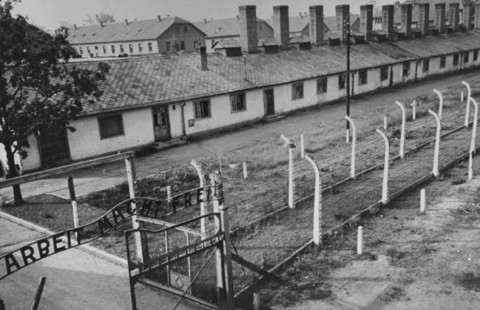
Prisoners entered the camp through iron gates topped with the infamous motto “Arbeit macht frei” (Work makes free) believing they were entering a labor camp.  But in addition to hard labor, prisoners were subjected to inhumane medical experiments and death.

This site from AwesomeStories.com, Auschwitz: Place of Horrors, tells the story using primary source photos and documents.

Today, the Auschwitz-Birkenau Memorial and Museum stands as a testament to those who lost their lives in one of history’s worst atrocities.  It consists of the extensive grounds and original camp blocks, barracks and guard towers, in addition to exhibits of personal possessions belonging to the millions who were brought here.

Also on exhibit are items depicting the life of prisoners while in the camp, as well as SS items belonging to the perpetrators left behind in the camp after liberation.

The museum’s collection of art associated with Auschwitz-Birkenau is the largest of its kind in the world.  These works made by the prisoners show the emotional stress endured by those prisoners every day and gives us an insight into what life must have been like for those who endured the hardships.

Some of the art was “commissioned” by camp officials, while much of the art was made secretly by the prisoners upon threat of harsh punishment if caught.  The Lagermuseum was a “special” museum that exhibited the plunder from the people deported to the camps.  In addition, there are many postwar art pieces created by former prisoners.

To view some historical photos and documents housed in the museum’s archives, click here.  Each icon is a sub-category.  Click on each sub-category for a full viewing.

Romanian-born Jewish American Elie Wiesel, Nobel Peace Prize winner, wrote a book called Night about his experiences in Auschwitz.  I have read it and it is truly thought provoking.  It will give depth and meaning to your visit if read before our departure.

This special documentary, “Oprah and Elie Wiesel at Auschwitz Part 1,” (9:59) gives you an idea of the camp from the perspective of a man who truly lived the experience.  This “Video Tour of Auschwitz-Birkenau” (14:49) will show you the camps. (Word of warning: some graphic images at the beginning.)

The 1993 movie Schindler’s List starring Liam Neeson depicts a Nazi German businessman who helped save thousands of Polish-Jews near Krakow by employing them in his factory.

A visit to the Auschwitz site is a very sobering experience meant to remind us that we must learn from history.  As philosopher George Santayana said, “Those who cannot remember the past are condemned to repeat it.”

Wednesday, June 13, 2012

Krakow - Wieliczka Salt Mine


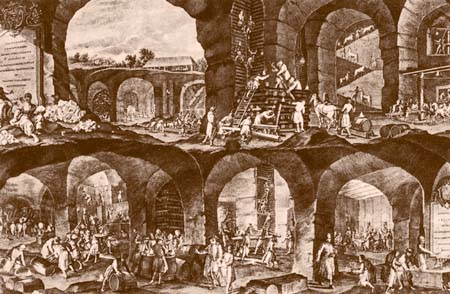
The Wieliczka Salt Mine  (pronounced 've-LEECH-ka') near Krakow, Poland was built in the 13th century and produced table salt continuously until 2007.  It is one of the world's oldest salt mines.  Fairly impressive in itself, but that is not the reason we added the site as one of our excursions to our tour on day 7.
 
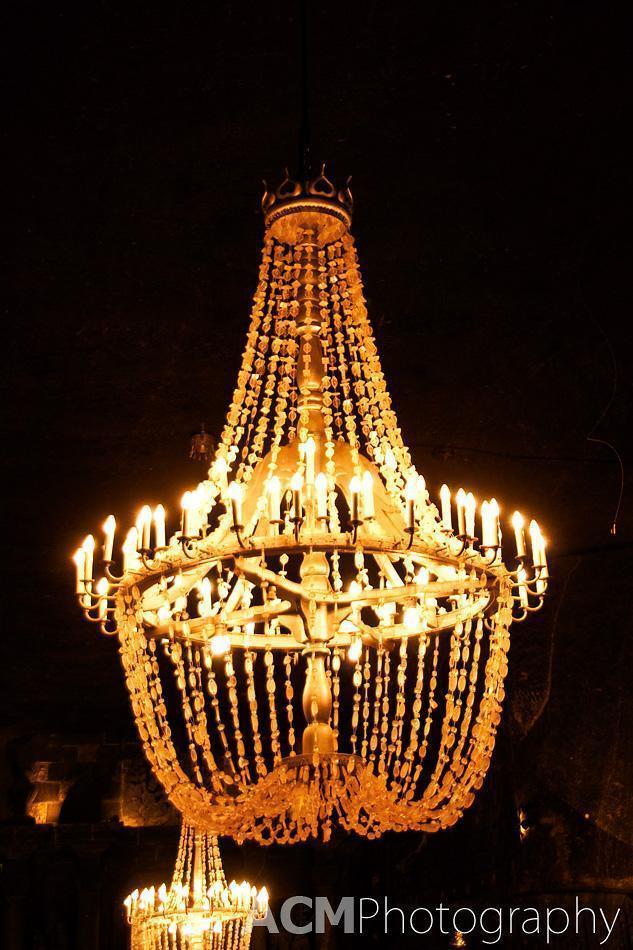
The mine's main features are hundreds of exquisitely carved statues and frescoes plus an entire chapel and chandeliers – completely carved from rock salt by the miners over the past seven centuries!   It is such a unique site that you really must see it to believe it.  Visitors have included Copernicus, Goethe, Chopin and Pope John Paul II.

Along the route are historic and religious statues and mythical figures carved out of rock salt in distant past. Even the crystals ofthe chandeliers are made from rock salt that has been dissolved and reconstituted to achieve a clear, glass-like appearance.  More recent sculptures have been fashioned by contemporary artists.

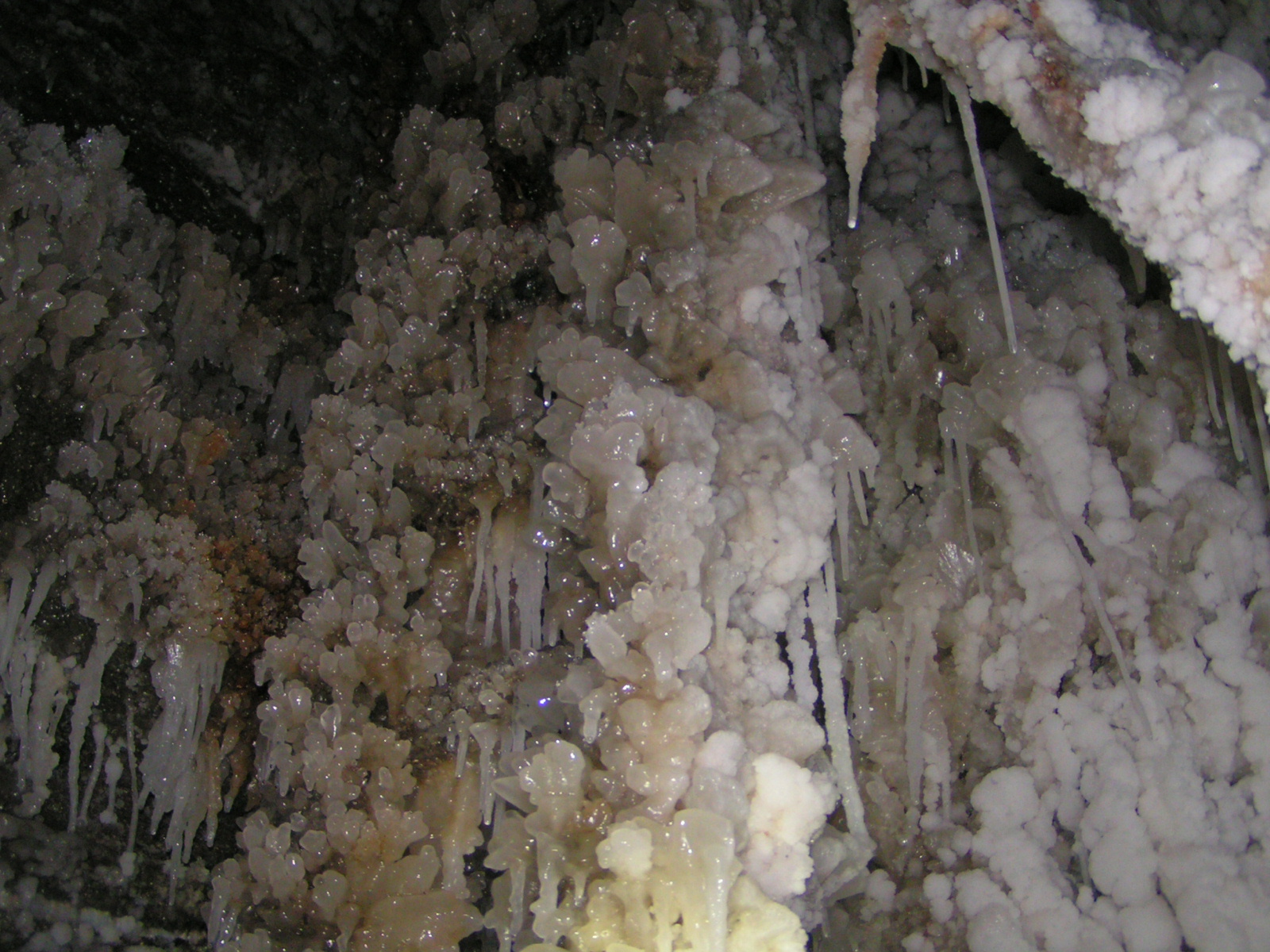
The carvings may appear white in the photos, but the actual carved figures are not white.  The rock salt is naturally gray in various shades, resembling unpolished granite rather than the white or crystalline you may expect. 

The mine features an underground lake and new exhibits on the history of salt mining. The largest collection of original tools and mining equipment illustrating the development of mining technology from the Middle Ages to modern times has been preserved here.   It also houses an underground museum and has a number of special-purpose chambers such as a sanatorium for people suffering from asthma and respiratory ailments. 

According to Polish legend and folklore, the mine's discovery in the 13th century was due to Queen Kinga, who was the daughter of king Bela IV of Hungary, and wife of Polish king Boleslaw the Modest.  The story reports that Queen Kinga threw her engagement ring into the Maramures salt mine in Hungary, and the ring was carried by the salt deposits to Wieliczka where it was rediscovered and presented to the Queen.

The Chapel of Saint Kinga is the lowest level that is open to the public, and many of the ancient shafts and caverns that lay below this level are now flooded with ground-water which has created vast underground lakes.

The mine is over 1,000 feet deep and over 190 miles long!  But don’t worry we will not be walking that entire distance or going that deep.  The full touring route is 2.2 miles long.    A wooden staircase with 378 steps provides access to the 210-ft. level of the mine.

Then there is a 1.9 mile walking tour of the mine's corridors, chapels, statues and lake 443 feet underground.  A small industrial elevator provides access to the surface and takes some 30 seconds to reach the top.  The temperature in the Wieliczka mine remains a constant 55 degrees.

This web site features awesome photos of the mine and more information.  This video is from UNESCO and provides a good overview.  This video gives you a look into the salt mine museum and a ride inside the elevator to the top!

A chance viewing one day of this segment from a Rick Steves travel show on Poland is what convinced me that this unusual site will definitely make our tour memorable: Krakow, Poland – Countryside and the Wieliczka Salt Mine.