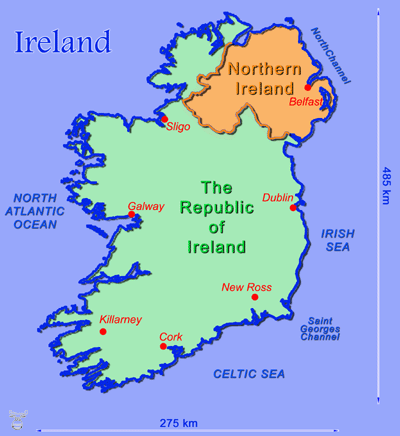
Technically speaking, Ireland is the island. But on this island are two separate political
countries…the Republic of
Ireland and Northern Ireland. The
Republic of Ireland is an independent sovereign nation. Northern Ireland is part of the United Kingdom
of Great Britain, which also includes Scotland, Wales, and England.
 Until 1921, Ireland was one undivided country under
British rule. So why are they split? What
started as a religious issue between the Protestants and the Catholics, has now
become a social and
cultural conflict.
Until 1921, Ireland was one undivided country under
British rule. So why are they split? What
started as a religious issue between the Protestants and the Catholics, has now
become a social and
cultural conflict.
Traditionally, Ireland is a
Catholic country. There are still
Catholics in Northern Ireland, but when citizens of England and Scotland started
emigrating to the northern part of Ireland 500 years ago, they brought their
Protestant religion with them, so they feel more culturally linked to Great
Britain through their Protestant ancestors.
(Remember England was also Catholic until King Henry VIII
got mad at the pope in the 16th century for not recognizing his marriage
annulment from Queen Catherine so he could marry Anne Boleyn. In defiance he “protested” and started the Church of
England.)
Under pressure from the mostly Protestant population in
the North to remain with the Protestant United Kingdom, the British and Irish
governments forced the division of the island into the north and the south.
The IRA (Irish
Republican Army) is a Catholic paramilitary organization whose goal is to
force the British out of Northern Ireland.
This terrorist group organized in 1919 and is believed responsible for hundreds
of deaths in the late 20th century.
The period after 1968 is referred to as “The Troubles.” British soldiers came in 1969 to restore
order but unfortunately took sides and discrimination of Catholics continued. Extremists from both sides took the law into
their own hands resulting in thousands either killed or imprisoned.
Ireland governs itself, and so did Northern Ireland until
the 1960s when the civil unrest forced Great Britain to impose Home
Rule. In the early 21st
century, Northern Ireland regained some of its independent government, but it
continues to remain under British Sovereign law.
There are also a few other differences. For example, the Republic
of Ireland uses the euro for its currency, while Northern
Ireland uses the pound sterling as part of the United Kingdom. In addition, speed limits in Northern
Ireland are shown on signs as miles per hour, while Ireland uses
kilometers. And look at the
mailboxes: Northern
Ireland mailboxes are red, while those in the Republic of Ireland
are green. That helps you tell when
you’ve crossed the border.
Regardless of their differences, the two countries both
approved the Belfast Agreement, also known as the Good Friday
Agreement, in 1998 which stated that the majority of the people of Northern
Ireland want to remain a part of the United Kingdom and that a substantial
number of people in Northern Ireland and most of the people of the island of
Ireland want a united Ireland.
The agreement basically says that both viewpoints are
equally legitimate and that the two countries will remain as they are until the
majority of both Northern Ireland and the Republic of Ireland want the two
united. The political leaders Catholic John Hume
and Protestant
David Trimble later received the Nobel
Peace Prize for their contributions.
However, in many places in Belfast, the lines are still
drawn. “Peace
Lines” (walls topped by barbed wire) can still be seen segregating factions
of Catholic supporters and Protestant supporters.
 |
| Northern Ireland mural |
Although Northern Ireland is a more peaceful place, one
can still see, especially in Belfast, territorial
flags, murals,
or curbstones
painted red, white, and blue for Protestant Loyalists or orange, green, and
white for Catholic Republicans.
Tourists are encouraged not to show any support to either
faction while traveling through these areas by wearing group colors or waving
union flags. Just to be safe, avoid
initiating conversation with locals on politics or religion, and shy away from
political demonstrations or controversial parades. It is best to err on the side of caution.
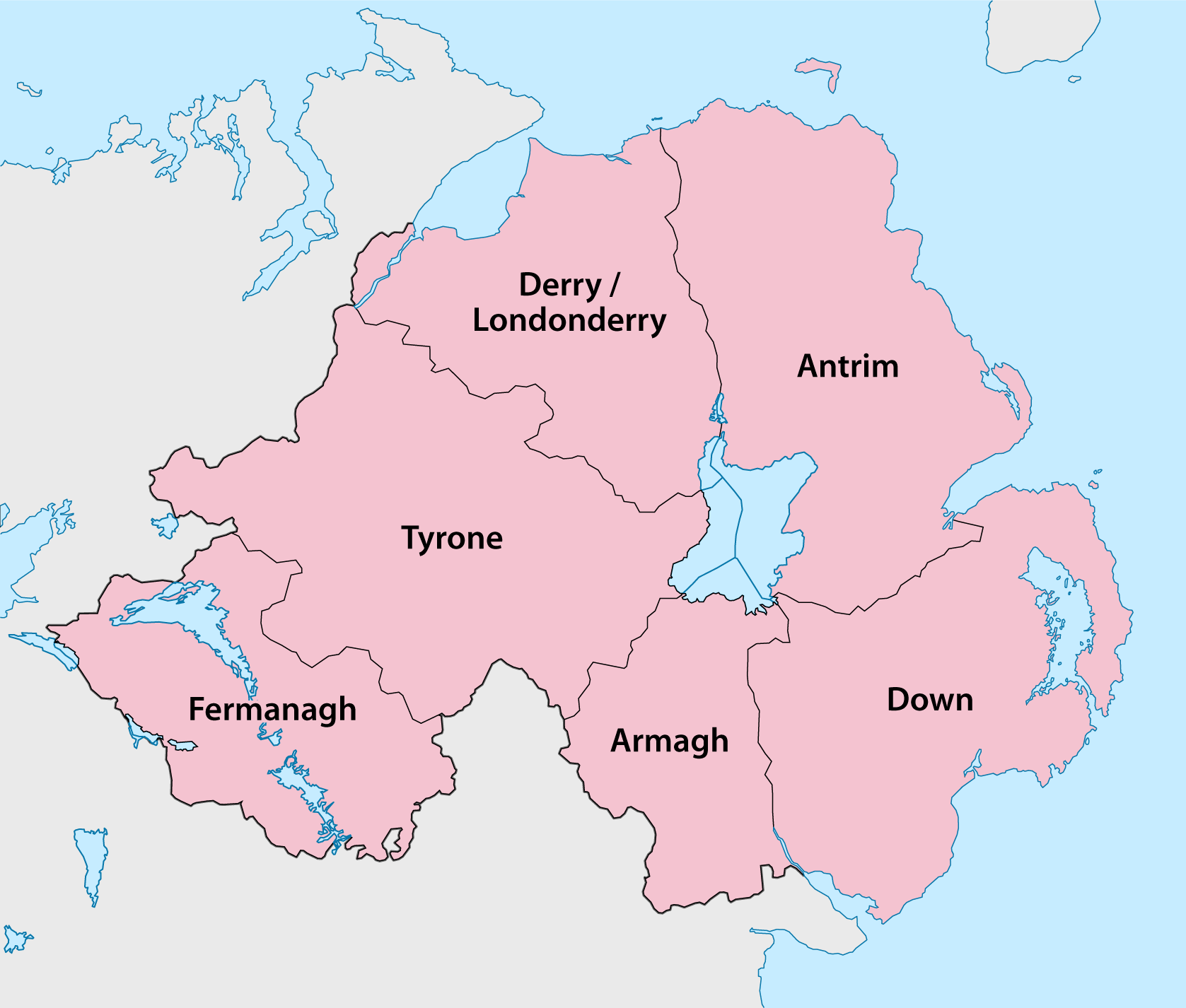
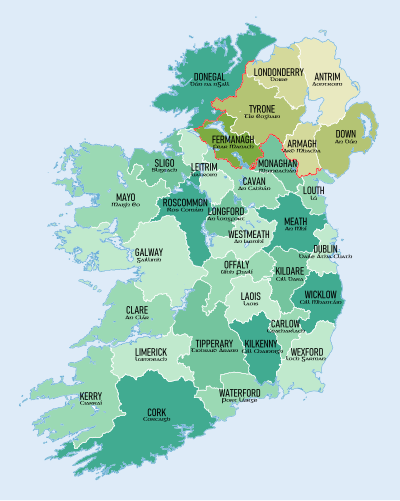
Today Northern
Ireland is composed of six counties, while Ireland
has 26 counties. Confusingly,
Northern Ireland is also a part of the province
of Ulster (one of four ancient Irish provinces), which also includes three
counties from the Republic of Ireland.
Still confused?
Watch this video “Get It
Right” (1:16) and see just how “simple” it is!
The first half of this video from Rick Steves “Belfast and the Best of Northern Ireland” (26:08) explains a little more about Belfast and the Troubles.
And if you are a history buff, you might like this
entertaining video “A Brief History
of the Conflicts in the North (of Ireland) (10:24).” It begins at THE
beginning and carries you through to current times. (Note: Remember to breathe somewhere in the
middle of it. It carries you pretty
fast!)