Showing posts with label waterfall. Show all posts

Sunday, February 12, 2017

Iguazu Falls National Park -- Argentina and Brazil

Iguazu Falls National Park 
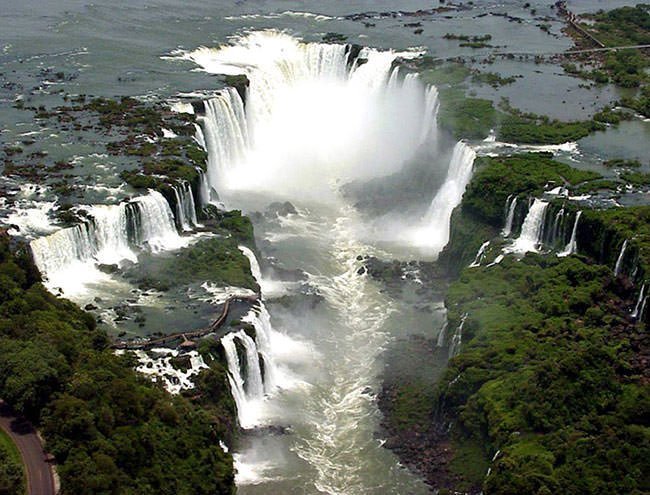
The Iguazú River, which means “big water” in Guaraní language, flows into the Paraná River. It is 1,500 meters wide (0.9 miles), and runs through islands and islets to finally fall from a lava cliff formed 120 million of years ago.  This creates one of the world’s most inspiring waterfalls.  Enjoy this Iguazu Falls overview video.

Now that you are totally immersed in this once in a lifetime experience, let’s learn more about the national parks surrounding the falls. There are actually two parks with the same name – one on the Argentinean side and one on the Brazilian side—that form the borders between the two countries.

The 167,340-acre Argentinean Parque Nacional Iguazú was created in 1934 and became a UNESCO National Park in 1984.  Iguazú is the Argentinean spelling. 

Its sister park on the Brazilian side is larger at 457,794 acres and was created in 1939.  It became a UNESCO World Heritage Site in 1986.  The Brazilian spelling is Parque Nacional Do Iguaçu, so if you have seen both spellings it is due to the country referring to it.  Remember…Argentina natives speak Spanish, while Portuguese is the national language of Brazil.

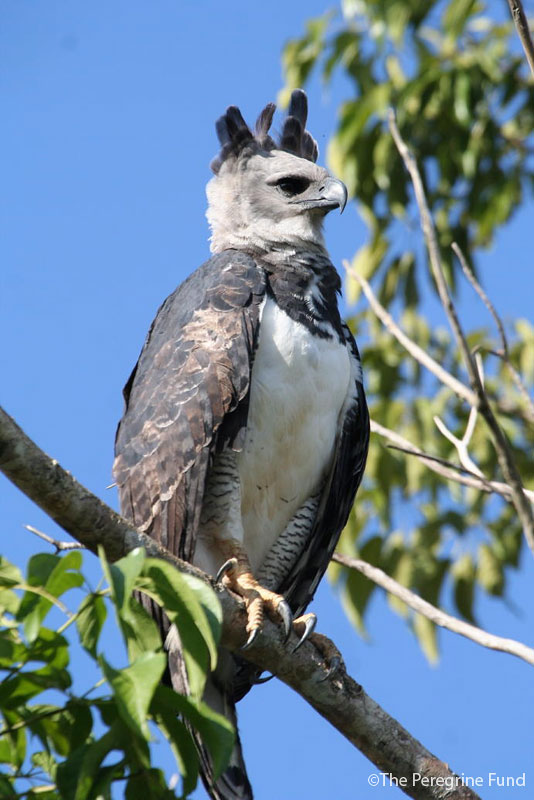
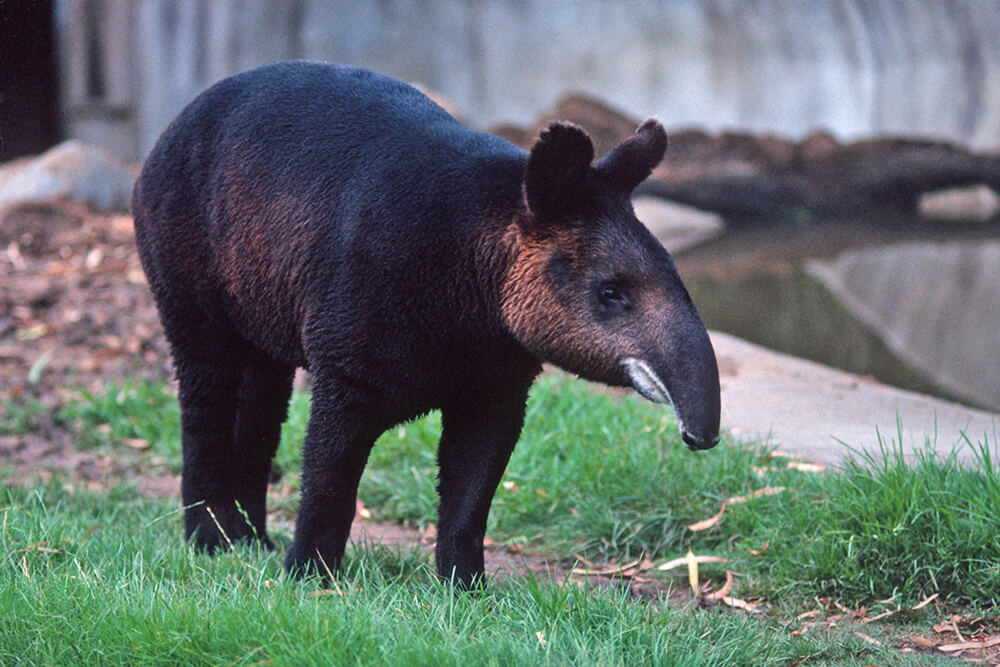
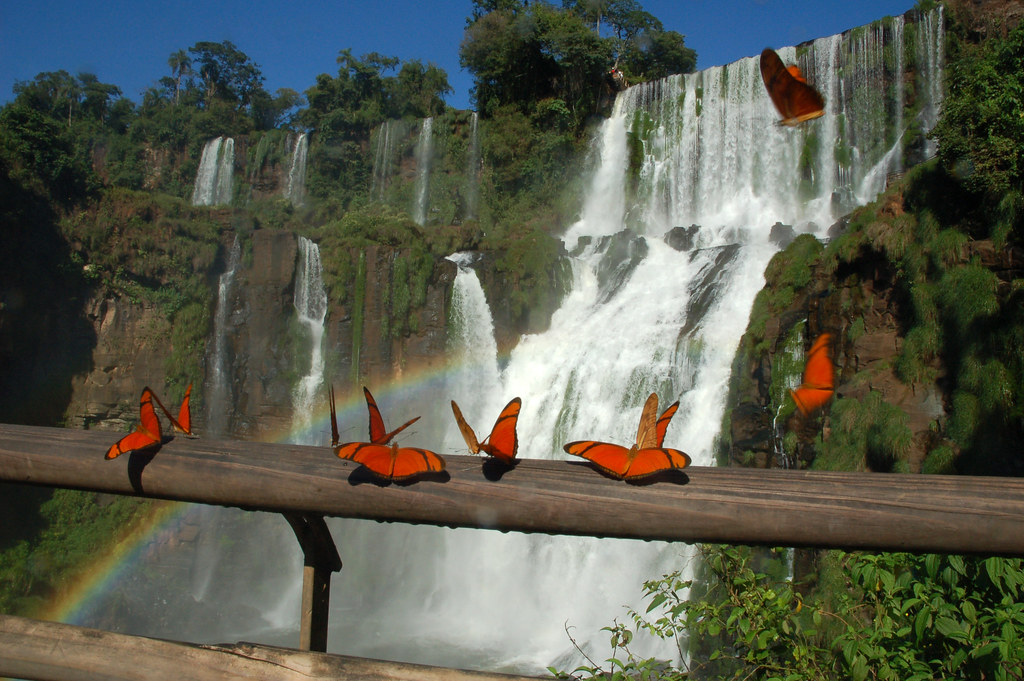
This combined area is home to many rare and endangered species of flora and fauna, and the mountain of mist created by the falls enables the lush vegetation to flourish.  The subtropical rainforest that surrounds the falls boasts over 2,000 plant species, 400 bird species including the harpy eagle and toucan,  and a wide variety of wildlife including tapirs, coatis, giant anteaters, howler monkeys, ocelots, jaguars, caimans…and a plethora of butterfly species. 

Coatis and Tourists!
We are not likely to run upon the dangerous ones, but don’t be surprised if you see a howler monkey or coati!!  An important rule to remember: no matter how much fun it looks, don’t feed the animals.

Iguazú (Iguaçu) parks and neighboring property comprise a significant remnant of the Atlantic Forest spanning Brazil, Argentina, and Paraguay.  It is one of the most threatened global conservation priorities as it now covers only 5% of its once one million square kilometers. 

Both the Iguazu park and the Iguaçu park have several walking trails of varying length and difficulty to reach the falls and explore the forest, as well as interpretive visitor centers.  In addition to walking, a jeep ride is included in our tour, along with the boat ride to the falls. 
There is also a train ride, but our tour does not list it.  Looking for tips on what to bring on this adventure, look here.

This video is really cool to show the falls from a tourist’s view…just what you’ll see.

Test your photography skill…bring along a selfie stick.  Watch how this guy films himself hiking along the falls!

The Iguazu Falls and park experience will be one to check off your bucket list!

Friday, January 20, 2017

Iguazu Falls -- Brazil and Argentina

Iguazu Falls
Named one of the New 7 Wonders of Nature in 2011, Iguazu Falls is the largest waterfalls system in the world.  Located on the border of the Brazilian state of Parana and the Argentina province of Misiones, its name means “big water.”  That’s easy to see as Iguazu Falls is made up of 275 waterfalls or cataracts spanning 2.7 kilometers. 

It is located on the Iguazu River within one of the few remaining inland rainforests in South America, the Atlantic rainforest, preserved as national parks by both Brazil and Argentina.  The parks were named UNESCO World Heritage Sites in 1984 and 1986, respectively .

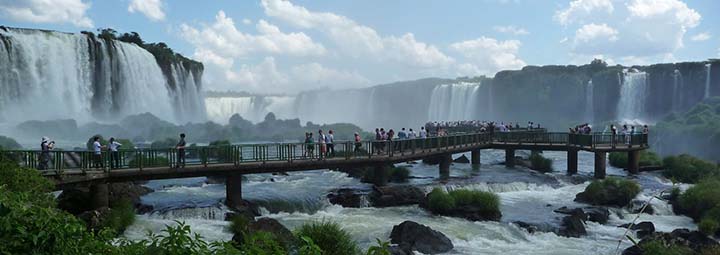
The Argentinean side, which features over two-thirds of the falls, offers visitors the opportunity to walk up close on a series of rustic-looking boardwalks, while the Brazilian side offers more panoramic views.

The tallest of the waterfalls is called Devil’s Throat and drops over 80 meters into a permanent cloud of mist.  Shaped like a horseshoe, it is the largest water curtain in the whole system and includes 14 waterfalls.

To put that into perspective, Iguazu Falls is nearly twice as tall as Niagara Falls and rivaled only by Zambia and Zimbabwe’s Victoria Falls, which are taller at 108 meters.
Iguazu Falls boardwalks

On average, 1,500 cubic meters of water flow every second.  In the rainy season between November and March, as much as 13,000 cubic meters of water flow every second – enough to fill five Olympic size swimming pools.  One of the highlights of touring the falls is the unforgettable “baptism” during a boat ride to the falls.

One legend says that a deity planned to marry a beautiful woman who fled with her mortal lover in a canoe on the Iguazu River.  In a rage, the deity sliced the river, creating the waterfalls and condemning the lovers to an eternal fall.

Iguazu Falls has been featured in many films including Moonraker (1979), Indiana Jones and the Kingdom of the Crystal Skull (2008), and Captain America: Civil War (2016).